
Home » Products » Environmental Test Equipment » GT-F56 Thermal Shock Chamber

GT-F56 Thermal Shock Chamber

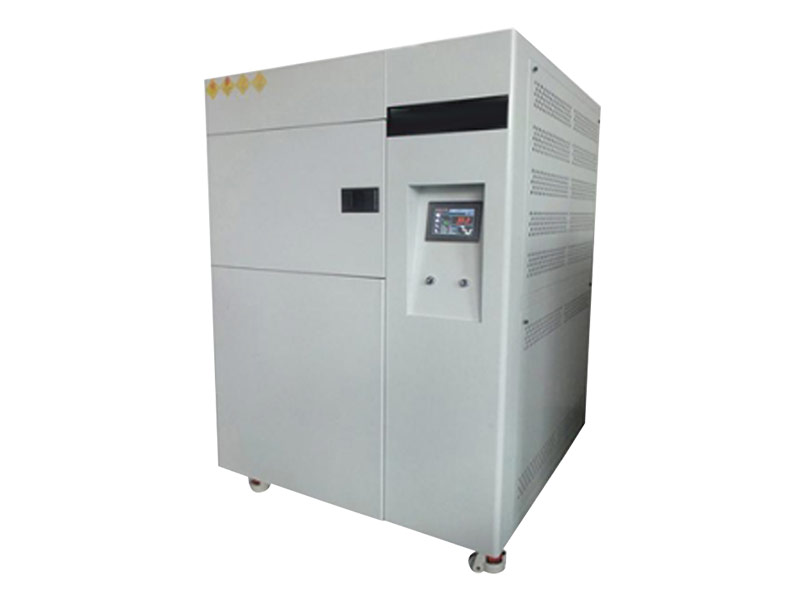
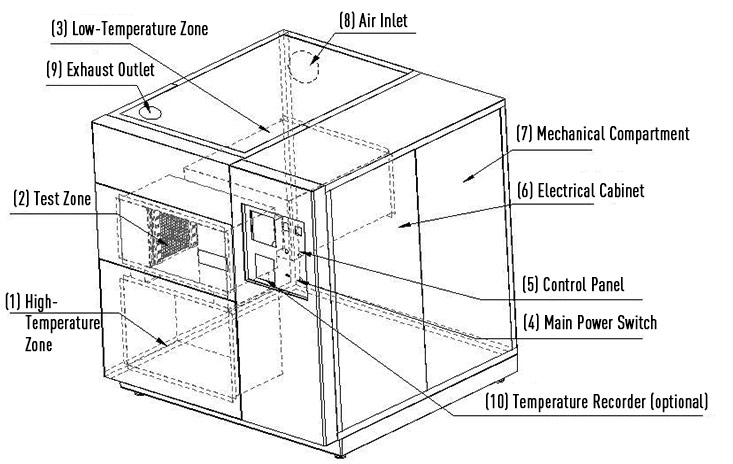
Test chamber outline drawing
  • High-Temperature Zone
  • Test Zone
  • Low-Temperature Zone
  • Main Power Switch
  • Control Panel
  • Electrical Cabinet
  • Mechanical Compartment
  • Air Inlet
  • Exhaust Outlet
  • Temperature Recorder (optional)
Application (Use Restrictions)
This test equipment must not be used for testing or storing:
  • Flammable, explosive or highly volatile samples
  • Corrosive substances
  • Biological samples
  • Samples that generate strong electromagnetic emissions

These restrictions are required to ensure safe operation and protect both the chamber and the operator.

Specifications
Temperature range of test area -40℃~150℃, -60℃~150℃, -65℃~150℃ ( optional)
High temperature range: +60℃~150℃
Low temperature range: -10℃~150℃
Testing environment conditions Ambient temperature: +28 ℃ Relative humidity: ≤ 85% Conditions measured with no sample inside the test chamber
Preheating temperature range +60℃~+150℃
Heating-up time +60 ℃ → +150 ℃: ≤ 40 min Note: Performance measured with the high-temperature chamber operating independently.
Low temperature chamber Note: The heating-up time listed above refers to the performance of the high-temperature chamber operating independently.
Precooling temperature range -55℃~-10℃
Cooling time +20 ℃ → –55 ℃: ≤ 70 min Note: Cooling performance is measured with the low-temperature chamber operating independently.
Testing method Switches between two or three temperature zones using a pneumatic ventilation door.
Temperature shock range -40℃~+150℃
Temperature fluctuation ±0.5℃
Temperature departure ±2.0℃
Temperature recovery time ≤ 5min
Recovery condition (Chart One) Sample: plastic-packaged integrated circuit (uniformly distributed)
Sensor position: upper side of the sample
High-temperature exposure: +150 ℃ for 30 minutes
Environment-temperature exposure: —
Low-temperature exposure: –40 ℃ for 30 minutes
Sample weight: 2.5 kg
Hot and Cold Impact Model Introduction
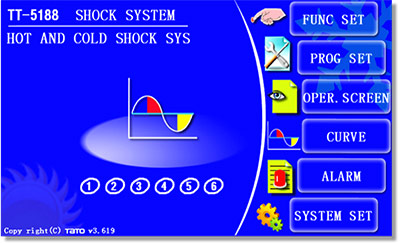
  • Appendix: [2-Zone] Setting
    For a two-zone thermal shock test (high temperature ⇄ low temperature), select 2 Zone mode.
  • Operating sequence:
    Low-temperature start → Preheating / Precooling → Low-temperature impact → High-temperature impact
    High-temperature start → Preheating / Precooling → High-temperature impact → Low-temperature impact
  • Note: A [3-Zone] setting is also available.
    If the test requires thermal shock cycling between high temperature, room temperature, and low temperature, select 3 Zone mode.
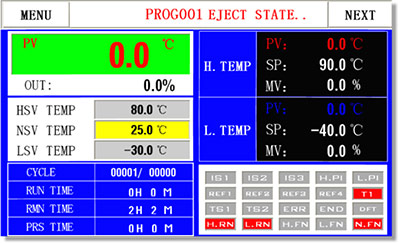
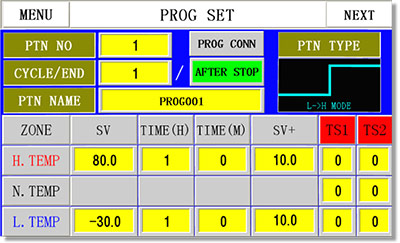
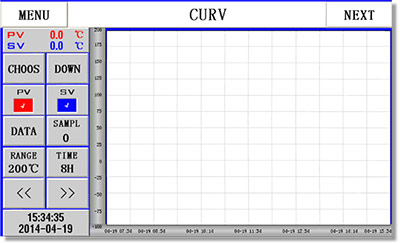
Operation System
  • Operation System
  • Operation System
  • Operation System
  • Operation System
Structure
  • Heat-insulated chamber enclosure
    Outer wall: cold-rolled steel sheet with stoving varnish
    Inner wall: SUS304 stainless steel plate
    Body insulation: rigid polyurethane foam + glass fiber
    Door insulation: glass fiber
  • Air conditioning channel
    Includes fan, heater, evaporator, air damper, and temperature sensor.
  • Standard chamber configuration
    One lead-through port located on the left side of the chamber body (φ50 mm round hole).
  • Test chamber load capacity (uniformly distributed)
    Two sample baskets, each with 5 kg load capacity.
  • Leveling feet and casters
    Equipped with 4 leveling feet for stable support and 4 casters for movement.
  • Test chamber door
    Single-opening door with left-side hinge and right-side handle (see Test Chamber Outline Drawing).
  • Circulating fan
    High-temperature / ambient-temperature exposure: 3φ, 400 W, centrifugal type
    Low-temperature exposure: 3φ, 400 W, centrifugal type
  • Control panel
    Includes controller display screen, fault indicator, hour meter, RS-232 interface, over-temperature protection setting, and main power switch.
  • Machine room
    Contains the refrigeration system, drainage device, and exhaust fan.
  • Power distribution control cabinet
    Houses the main leakage circuit breaker, controller, distribution board, cooling fan, and motors for high- and low-temperature circulation.
  • Heater
    Nickel-chromium alloy strip heater.
  • Heater control mode
    Non-contact pulsed SSR (solid-state relay) control.
  • Power cable port and drain port
    Located at the rear of the chamber.
Related products
Inquiry Form